
Positive Behaviour Support Supervision, Training & Resources for Australian PBS Practitioners
Welcome to The PBS Practitioner Place — a space for practising and prospective Positive Behaviour Support practitioners across Australia to explore, learn, reflect and grow their practice. Discover practical guidance, resources, professional development and supervision to support you along the way.
When you’re ready to take the next step to get registered or grow in your practice, consider Positive Behaviour Support Supervision with Rebecca Kim, an endorsed Advanced-level PBS Practitioner with immediate availability for practising and prospective practitioners across Australia.
I’m experienced in helping people get started in their careers as a Behaviour Support Practitioner and providing the training and support you need for registration and continual development.
I can help you assess whether you’re ready to submit your registration to the NDIS Quality & Safeguarding Commission, provide case consultation, quality assure your documents, and take your practice deeper so you can reach Advanced or Specialist level.


Our vision is to offer you a place where PBS practitioners can develop their practice without feeling judged, while becoming genuinely more capable and confident.
PBS Support Services
Set up your first supervision or training session and take the next step towards being the practitioner you want to be.
You don't have to book your first supervision with all the answers. Bring the questions about what to do because you’re feeling lost. Bring the difficult case. Bring the draft you're unsure about. Bring the situation you can't quite work out. That's what supervision is for.
Brand new to PBS? You're welcome here too. You don't need to already understand PBS, the Capability Framework, or practitioner registration before getting in touch.
I work with people who are considering becoming a Behaviour Support Practitioner, people preparing for registration, brand-new practitioners finding their feet, and experienced BSPs developing their practice. If you're not sure what you need yet, that's something we can work out together.
The free compatibility check might also be your chance to discover whether becoming a practitioner could be your future career.
Book now to immediately lock in your time, otherwise send us a message to get started or if you have a request or question not answered in our FAQs.
-
Not sure what you need yet? That's completely fine.
This free chat is a chance to talk through where you're at, ask questions and work out what your next steps might look like.You might be thinking about becoming a Behaviour Support Practitioner, preparing for registration, brand new to PBS, looking for supervision, or already practising and looking for some additional support.
There's no obligation to book anything afterwards — it's simply a chance to have a chat and see whether I can help.
-
Individual supervision tailored to where you are in your development as a Behaviour Support Practitioner.
Whether you're preparing for registration, brand new to PBS, finding your feet in practice or looking to develop more advanced skills, 1:1 supervision gives you dedicated time to focus on what matters to you.
Sessions can include case discussions, reflective practice, professional development, Capability Framework progression, reviewing your work, working through challenges or simply asking the questions you're not sure who else to ask.
You don't need to come to supervision knowing what you need to work on — we can figure that out together.
-
Bring a friend or up to 2 colleagues to join a supportive space to learn, reflect and develop alongside other Behaviour Support Practitioners.
Group supervision gives you the opportunity to explore practice questions, discuss challenges, hear different perspectives and learn from the experiences of other practitioners — while still having guidance from an experienced PBS Supervisor.
Sessions may include case discussions, reflective practice, professional development, Capability Framework development and shared problem-solving around the realities of PBS practice.
You don't need to be the most experienced person in the room to contribute — sometimes the best learning starts with asking a question.
-
Practical, case-study based training for new and developing Behaviour Support Practitioners.
Whether you're brand new to PBS or looking to strengthen particular areas of your practice, the training is designed to help you understand not just what to do, but why.
You'll work through realistic practice scenarios while developing skills in assessment, analysis, PBSP development, implementation and reflective practice, with learning linked to the PBS Capability Framework.
Training is available through supported sessions or independent learning with review and feedback.
You don't need to know everything before you start — that's what the training is for.
-
Detailed feedback to help strengthen your PBS documentation and develop your skills as a practitioner.
Document reviews can include Positive Behaviour Support Plans, BIPQEII scoring and feedback, Professional Development Plans, and other documentation prepared for practitioner suitability or PBS Capability Framework progression.
You'll receive practical feedback on what's working well, what could be strengthened, and areas to consider further — so the review supports your development rather than simply checking a document.
PBS Capability Framework portfolio reviews are also available; however, endorsement can only be provided where you are an active supervisee with us.
What You Can Expect from PBS Supervision

Support wherever you're starting from
You don't need to already know what you're doing or what you need from supervision. Whether you're preparing for registration, brand new to PBS, or already practising, we'll start with where you're at.
A safe space
You can bring uncertainty, mistakes, difficult cases, and questions without fear of being shamed. There are no questions you're expected to already know the answer to.
Honest feedback
I'll tell you when something needs strengthening — and we'll work out how to strengthen it.
Clinical reasoning
We won't just look at what you're doing. We'll explore why you're doing it, so you can build confidence in making your own practice decisions.
Practical support
Bring your assessments, plans, reports, ethical dilemmas, restrictive-practice questions or tricky conversations — or simply bring the questions you don't know where else to ask.
Reflective practice
We'll consider your assumptions, your influence on the work, and the experiences of the person you're supporting.
Growth over time
Supervision isn't about knowing everything from the beginning or fixing everything in one session. It's about developing your confidence and capability as a practitioner over time.
Get Started With Us
Not ready to book? That's okay.
Explore our free resources, read our articles, or download something useful for your practice. You don't have to become a client to find something valuable here.



PBS Practitioner Guides & Articles
Our Director regularly writes free articles across a range of topics, including becoming registered, professional development, endorsement and supervision.
We aim to create a wide selection of articles covering the beginning stages of becoming a Behaviour Support Practitioner through to writing effective plans that people can actually use.
Becoming a Behaviour Support Practitioner
Registration pathways, self-assessment, professional development planning, endorsement and getting started in PBS.
Developing Your PBS Practice
Reflection, professional judgement, sustainable practice, self-care and developing capability over time.
PBS Supervision
Choosing supervision, supervision agreements, session structure, getting more from supervision and developing through reflective practice.
Follow our latest articles via RSS
Tools to Support Your Practice
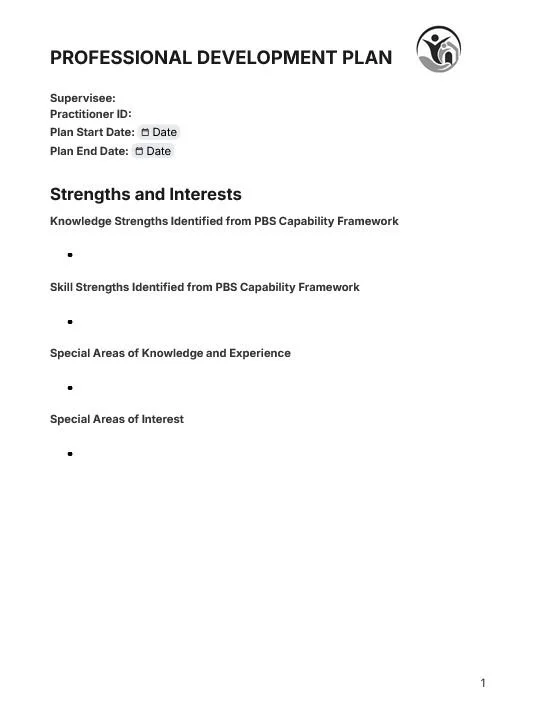
This editable Word version of the Professional Development Plan is designed for Behaviour Support Practitioners who want to identify capability development priorities, plan their professional development, and update their plan over time.
If you're preparing a Professional Development Plan as part of your Behaviour Support Practitioner registration, read our guide to preparing your Professional Development Plan for practical guidance on identifying development priorities and completing the document: https://www.thepbspractitionerplace.com.au/new-bsp/pd-plan
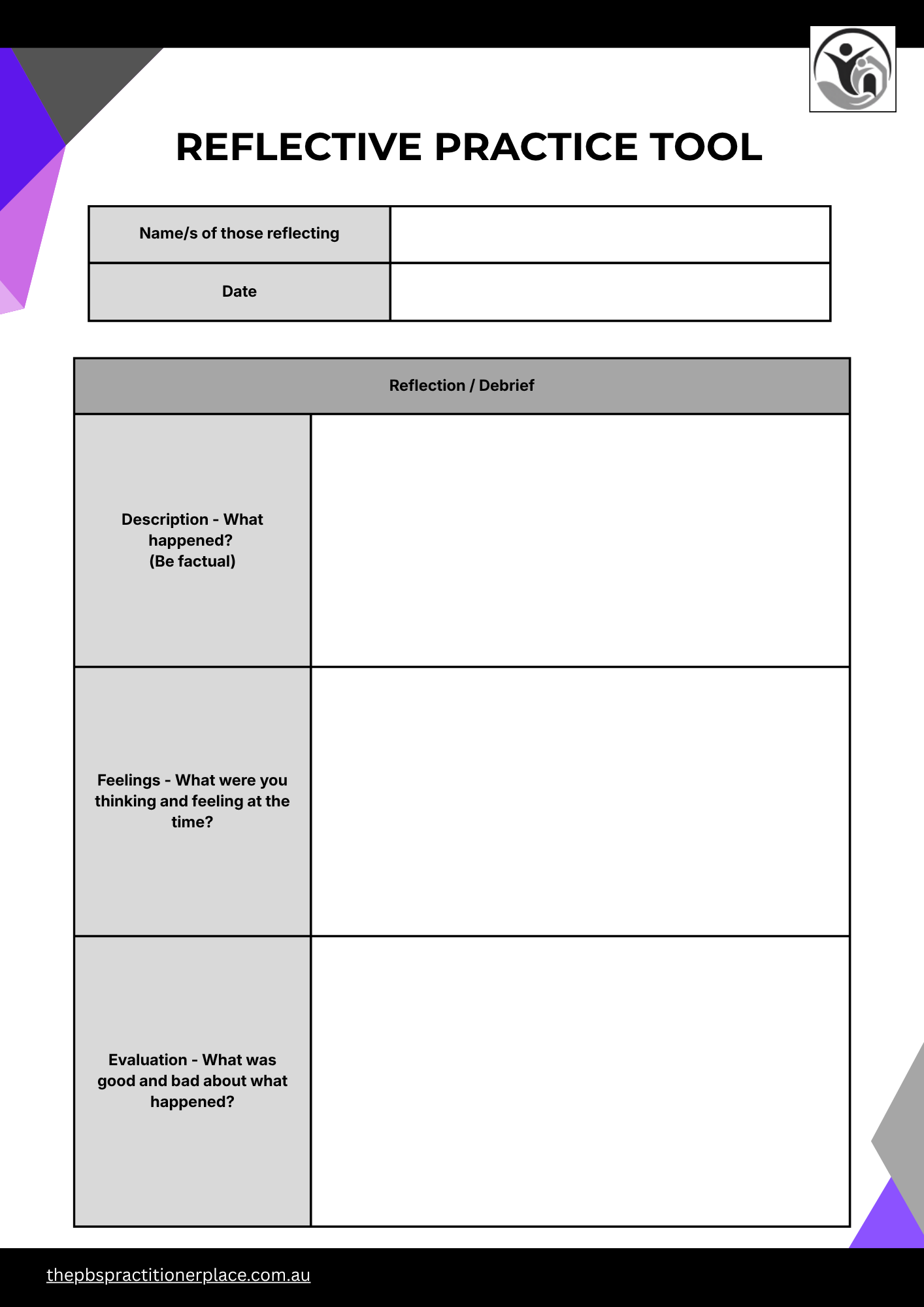
The Reflective Practice Tool is designed to help Behaviour Support Practitioners reflect systematically on experiences from their practice and identify learning that can inform what they do next.
It can be used independently, during supervision, or as a structured debriefing tool with others. Good reflection isn't always comfortable, but the aim isn't to judge your practice — it's to understand what happened, what you can learn from it, and what you might do differently next time.
Not sure when or how to use reflective practice? Read this article for Behaviour Support Practitioners for practical examples of how this tool can be used: https://www.thepbspractitionerplace.com.au/exp-bsp/reflection
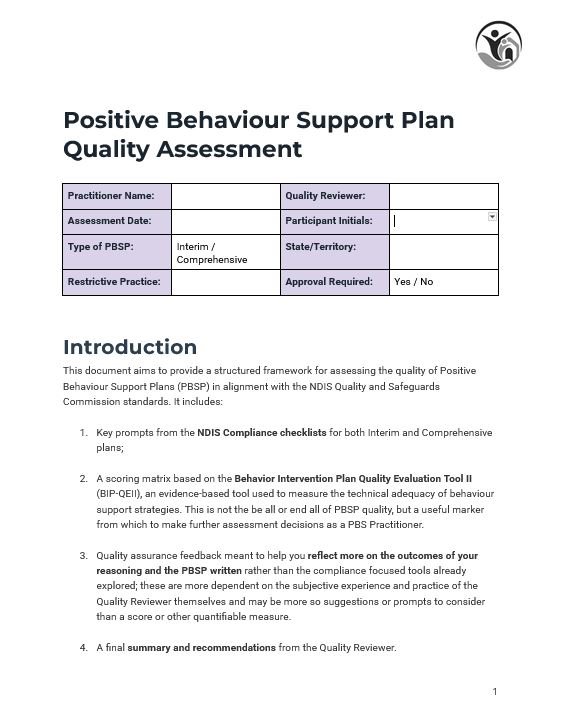
The Behaviour Support Plan: Quality Assessment Report is a practice-support tool for Behaviour Support Practitioners who want to critically review the quality of a Behaviour Support Plan (PBSP). It may be useful for practitioners reflecting on their own plans, supervisors supporting practitioner development, and practitioners developing their skills in reviewing and endorsing the work of others.
The report brings together key components from the NDIS Commission checklists for Interim and Comprehensive Behaviour Support Plans and the BIP QEII quality evaluation tool, alongside prompts for professional reflection, a summary of findings, and recommendations for improvement. See our article talking through how to tell if a PBSP is good quality: https://www.thepbspractitionerplace.com.au/exp-bsp/pbsp-quality-check
It is designed to support structured professional judgement and reflection on PBSP quality rather than replace NDIS Commission requirements or organisational quality assurance processes.
Good PBS practice takes more than knowing the theory. Sometimes it helps to have the right tool in front of you.
Explore practical resources created to help PBS practitioners reflect, plan their professional development, build capability and put learning into practice.
A selection of our practitioner resources is showcased here, with more being added over time. Sign up for updates to hear when new resources are added.

Why We Do This
I've been where you are.
I've worked in disability support, coordination, leadership and PBS. I've been the practitioner learning how to make sense of complex situations, and I've supervised practitioners as they've developed their own practice.
My experience spans frontline disability support, service coordination and leadership through to Positive Behaviour Support practice, clinical leadership and practitioner supervision. That experience shapes the practical guidance, resources and supervision available throughout The PBS Practitioner Place.
Supervision shouldn't leave you wondering whether you were “good enough.” It should leave you with a clearer understanding of your practice and what you can do next.
Read more about my long journey to opening The PBS Practitioner Place on the About page.

Send an Enquiry
You don't need to have everything figured out before contacting us.
Whether you're thinking about becoming a Behaviour Support Practitioner, preparing for registration, looking for supervision or training, already practising and needing some additional support, or simply have a question — you're welcome to get in touch.
Tell us a little about where you're at and what you're looking for. If you're not sure what you need yet, that's completely fine too — we can help you work that out.
We aim to respond to all enquiries within 2 business days. Read our Privacy Policy here.